

Enterprise "Agent OS" with trust, memory, and multi-agent coordination — built by ex-Atlassian CTO.
Tool useMemoryRAGMulti-agent
"Multiplayer AI" — shared, governed company-wide agents across your stack.
| Spec | Dust | Wordware |
|---|---|---|
| Agent Rank | 77 / 100 (A) | 75 / 100 (A) |
| Autonomy | Semi-autonomous | Semi-autonomous |
| Pricing | Subscription · from $29 | Freemium · from $29 |
| Open source | No | No |
| Capabilities | Tool use, Memory, RAG, Multi-agent | Tool use, Memory, Multi-agent, RAG |
| Integrations | 5 apps | 4 apps |
| Verified | — | Verified |
| Released | Mar 2025 | Apr 2025 |
Auto-computed from autonomy, capabilities, integrations, pricing, maturity and editorial verification. Updated every deploy. How is this computed?
Auto-computed from autonomy, capabilities, integrations, pricing, maturity and editorial verification. Updated every deploy. How is this computed?
Pick Wordware if you want a vendor we've verified for accessibility and pricing accuracy.
Try Wordware →Affiliate links. We may earn a commission at no extra cost to you.
Pick Dust if its specific capabilities (Tool use, Memory) match what you need. Pick Wordware if you want a vendor we've verified for accessibility and pricing accuracy. Most working teams running both can use Dust for primary work and Wordware for the workflows where its specific strengths matter.
Both Dust and Wordware start in the same pricing range (Subscription · from $29 vs Freemium · from $29). Total cost of ownership depends on your team size and volume — see the TCO calculator for your specific math.
Both Dust and Wordware are Semi-autonomous agents — neither has a meaningful autonomy advantage over the other. The decision should hinge on capabilities and pricing instead.
Adjacent agents in the same category with overlapping capabilities — worth a side-by-side glance before you commit.
Enterprise "Agent OS" with trust, memory, and multi-agent coordination — built by ex-Atlassian CTO.
GDPR-native multi-model AI workspace with built-in agent builder — Europe's Glean alternative.
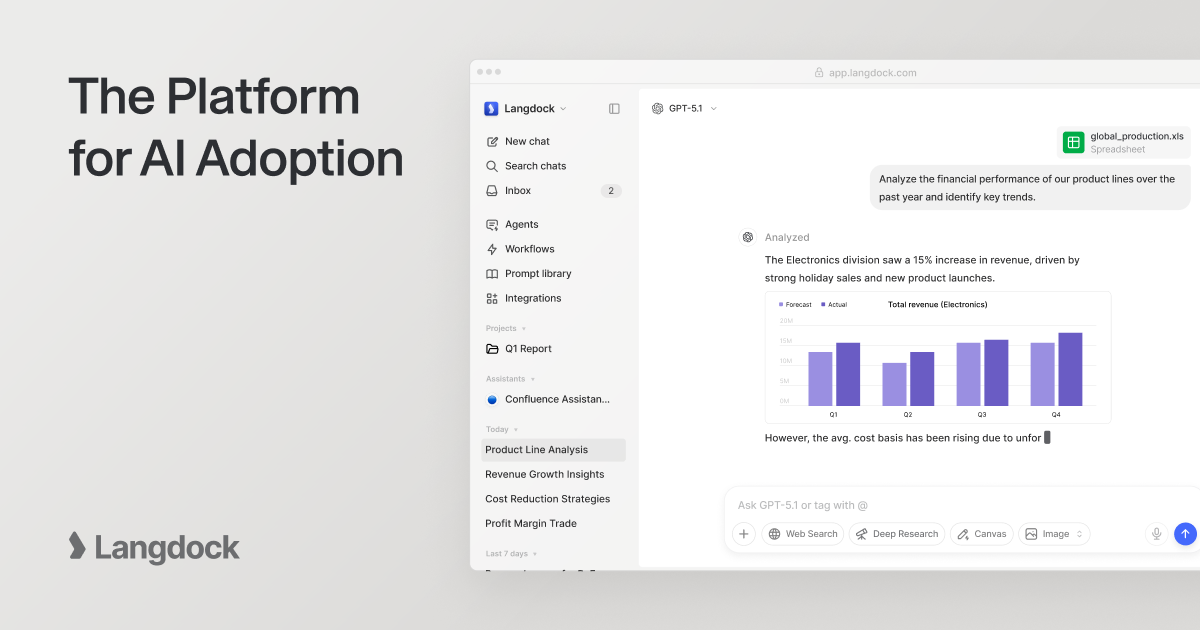 Demo · hover to play
Visual workflow automation with AI agents — drag-and-drop scenarios across 2,000+ apps.